 Cart is empty
Are peptides for muscle growth safe? Existing studies already have a lot to tell us, but there are still unknowns to be aware of before you start your own research.
This guide will cover the safety considerations, known side effects, legal status, and FDA approval statuses for peptides studied in muscle growth research.
Note that this article is aimed at researchers and informed readers – it is not a guide for personal use.
Are Peptides Safe for Muscle Growth Research?
To ensure peptides for muscle growth are safe, they are studied following institutional safety protocols in controlled laboratory research settings. Their safety profiles depend on factors including compound class, purity, and handling.
Safe peptides for muscle growth by compound class fall mostly into the following categories:
- Growth hormone (GH) secretagogues, including CJC-1295[1], ipamorelin, and sermorelin. These are relatively well studied[1]. Research has found that they increase lean body mass while reducing fat mass, boost muscle strength, and lead to greater linear growth. Since there have been early human trials on these peptides, side effects are known and documented.
- Healing peptides, including BPC-157 and TB-500. Most data for these peptides come from animal studies, with limited human safety data available. In preclinical studies[2], peptides like BPC-157 have shown to have regenerative and protective properties.
- Insulin-like growth factor-1 (IGF-1) variants, like PEG-MGF. Research[3] has found that these peptides increase skeletal muscle protein synthesis. However, as there are only preclinical studies for these peptides, long-term human safety is unknown.
For all the above, purity is a critical safety factor. When peptides are HPLC tested and CoA verified, there is a significantly reduced contamination risk, meaning products just contain the peptides they claim to and no additional substances that could impact safety.
Peptides for Muscle Growth: Known Side Effects
Published research documenting the side effects of peptides for muscle growth by class reveals which may be the safest peptides for muscle growth. However, it’s important to note that the side effect data for most peptides come from animal models due to the limited human trials. Long-term safety in humans has not been established for the majority of compounds listed in this article.
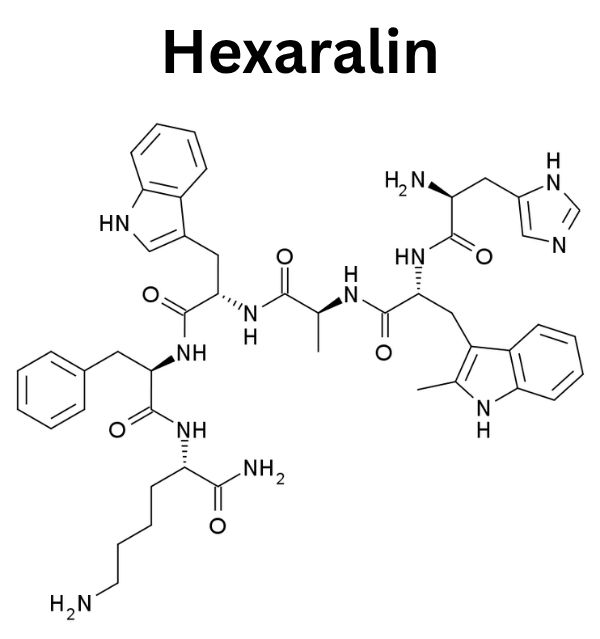
GH Secretagogues (CJC-1295, Ipamorelin, GHRP-6, Hexarelin, Sermorelin)
In human and animal studies, GH secretagogues have demonstrated the following side effects:
- Water retention[4] — This is due to increases in sodium and extracellular water. The good news is sodium and water retention does not appear to increase blood pressure.
- Joint discomfort[5] — In mice, an excessive amount of GH was found to promote joint degeneration due to the effects of IGF-1 on synovial tissue.
- Transient headaches[6] — Possibly due to vasodilation from GH release.
- Tingling or numbness[6] — These carpal tunnel-like symptoms may be linked to higher GH levels.
- Cortisol and prolactin spikes[7] — Such side effects tend to occur with less-selective GHRPs like GHRP-6 and hexarelin. They are less common with ipamorelin.
- Injection site reactions[6] — Reactions like redness and mild swelling appear to be more common with long-acting GH secretagogues than daily GH.
Healing Peptides (BPC-157, TB-500)
Human data for healing peptides are much more limited, with most coming from animal models. However, these peptides have been generally well tolerated in preclinical studies. The most commonly documented side effects[8] are injection site irritation and possible vascular effects due to enhanced angiogenesis activity.
IGF-1 Variants (PEG-MGF)
There are only preclinical data for IGF-1 variants, with no established human safety profiles. Of theoretical concern is IGF-1 pathway activation[9] and cell proliferation. Researchers should consider oncological variables in any long-term study designs.
Are Peptides Legal for Muscle Growth?
Are peptides for muscle growth legal? In most jurisdictions, purchasing research-grade peptides for laboratory use is legal. CellPeptides supplies legal peptides for muscle growth for research purposes only. Using research peptides for personal performance enhancement falls outside the intended legal use.
It’s important to note that the World Anti-Doping Agency (WADA) prohibits GH secretagogues and most performance peptides for competitive athletes. Furthermore, there are no FDA-approved peptides for muscle growth or athletic performance enhancement in the U.S.
Some common peptides do have FDA approval, but for other uses:
- Sermorelin became FDA approved[10] for GH deficiency in children in 1997, but it is not approved for bodybuilding. In fact, it is no longer available for GH deficiency treatment, as the manufacturer discontinued production in 2008. It’s important to note that the peptide was withdrawn from sale for business reasons, rather than for any issues with its safety or efficacy. Sermorelin remains available from some off-label uses and from compounding pharmacies.
- Tesamorelin received FDA approva[11]l for HIV-related lipodystrophy in 2010, but it is not approved for performance. It reduces excess abdominal fat but has a weight neutral effect, meaning it is not indicated for weight loss management.
- Semaglutide and tirzepatide are FDA approved[12] for obesity and diabetes, but not for muscle building. Researchers acknowledge that there are numerous benefits of semaglutide[13] but that these are complicated by the various doses and preparations available. Every possible indication will require studying to determine how to use the peptide safely and effectively.
FDA-Approved Peptides for Muscle Growth – What the Reality Looks Like
FDA approval[14] means a drug or biological product (such as a peptide) has demonstrated in clinical trials that it is safe and effective for a specified use. For researchers, this matters because it means the benefits outweigh the benefits. As of 2026, there are no FDA-approved peptides for muscle growth or bodybuilding.
The above peptides all received FDA approval for their intended uses based on human safety and efficacy data:
- Sermorelin[15] was originally approved for paediatric GH deficiency based on human safety data in children with idiopathic growth hormone deficiency. It later also received approval for lipodystrophy in HIV patients.
- Tesamorelin[16] received approval for HIV lipodystrophy due to IGF-1 elevation data.
- Semaglutide[17] and tirzepatide[18] were approved for metabolic conditions after body composition research.
Approved compounds have robust human safety data published in the literature, while non-approved compounds have primarily preclinical data. Researchers should design their studies in a way that acknowledges this evidence gap.
Pros and Cons of Peptides for Muscle Growth Research
To decide whether further research into peptides could be worthwhile, it’s helpful to weigh the pros and cons of peptides for muscle growth.
| Pros | Cons |
| A targeted mechanism acts on specific receptors and pathways | Most compounds are not FDA approved for this use |
| Some compounds have established human safety data, e.g. sermorelin, tesamorelin | Long-term human safety is largely unknown |
| Research-grade purity levels are available (for instance, when peptides are HPLC tested and CoA verified) | Peptides require sterile handling and proper lab technique |
| The wide range of compounds available cover different research angles | There is a risk of contamination when sourcing from low-quality suppliers |
| Synergistic stack options have been studied (CJC-1295 + ipamorelin) | There are limited human clinical trial data for most compounds |
| There is documented preclinical efficacy across multiple classes | Peptides are WADA prohibited for competitive athletes |
How to Minimise Risk in Peptide Research – Safety Best Practices
There are a few things to do to reduce risk when conducting research into peptides on muscle growth:
- Source only from HPLC-tested, CoA-verified suppliers, as purity directly impacts safety profiles.
- Store peptides correctly. Keep lyophilised peptides at -20 degrees C and reconstituted peptides at between 2 and 8 degrees C. Use peptides within seven to 14 days.
- Use a sterile technique. This includes bacteriostatic water, insulin syringes, and a clean workspace.
- Follow institutional biosafety protocols.
- Document all handling steps, concentrations, and dates.
- Dispose of sharps and biological waste responsibly.
- Reference published literature for dosing ranges. Do not extrapolate beyond studied parameters.
CellPeptides supplies HPLC-tested peptides with a Certificate of Analysis on every batch. Our peptides are 99% purity minimum from an ISO 9001:2015 certified lab.
Safety & Regulatory Notice
All the peptides mentioned above are for laboratory research only, not for human consumption, personal use, or athletic performance enhancement. None are FDA approved for muscle building. Researchers must follow institutional ethics protocols, biosafety guidelines, and any applicable local regulations. CellPeptides sells research-grade compounds only — not medications or supplements.
This article is for informational and research reference purposes only. It does not constitute medical advice. Do not use research peptides for personal health, fitness, or athletic purposes.
Conclusion
To ensure studies into peptides for muscle growth are safe, researchers should reference published literature, use verified suppliers, and follow institutional protocols.
Conducting peptide research requires choosing the right compound class, using peptides with a high purity, handling peptides correctly, and designing an appropriate study. Consider the research that already exists for the peptide, including what it is approved to treat, whether there are any human data, and what side effects have been documented. Bear in mind that human data are limited for most compounds, meaning side effects are only known for animal models.
Frequently Asked Questions
Many peptides are FDA approved, but for applications other than muscle growth and bodybuilding. Those that have FDA approval have known safety profiles, and peptides that have been tested in humans have had their side effects documented. This makes them safer for muscle growth research.
The safest peptides include those that are FDA approved, such as sermorelin, tesamorelin, semaglutide, and tirzepatide. In addition, GH secretagogues like CJC-1295 and ipamorelin are relatively well studied in humans.
When used for muscle growth, long-term side effects in humans have not been established for the majority of peptides.
In most jurisdictions, purchasing research-grade peptides for laboratory use is legal. This includes lab use for muscle growth studies.
The FDA-approved peptides sermorelin, tesamorelin, semaglutide, and tirzepatide all have potential to contribute to muscle growth research.
Safe peptides are those with a high purity level (at least 99%) and sourced from HPLC-tested, CoA-verified suppliers. Peptides that may be unsafe come from unregulated labs, may be contaminated, and lack human safety data.
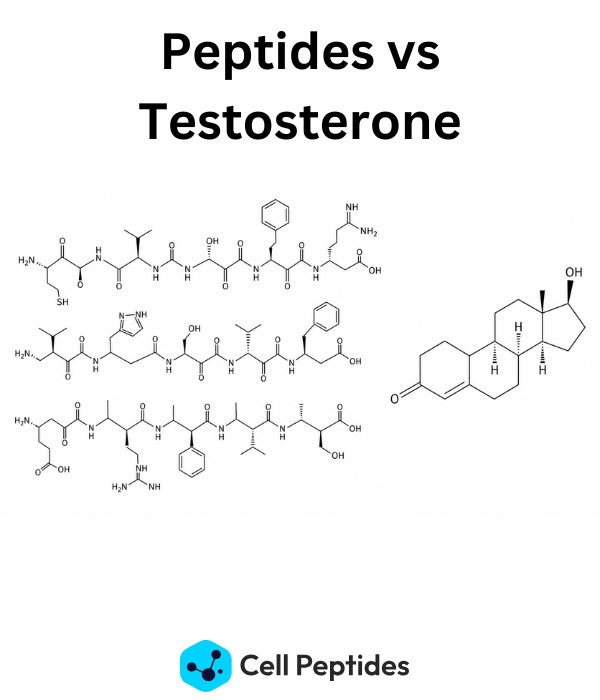
Peptides are a completely different class of compound to steroids. Peptides are short chains of proteins that occur naturally in the body, while steroids are synthetic variants of hormones.
Scientific References
[1] The Safety and Efficacy of Growth Hormone Secretagogues – https://pmc.ncbi.nlm.nih.gov/articles/PMC5632578/
[2] Regeneration or Risk? A Narrative Review of BPC-157 for Musculoskeletal Healing – https://pmc.ncbi.nlm.nih.gov/articles/PMC12446177/
[3] Mechanisms of IGF-1-Mediated Regulation of Skeletal Muscle Hypertrophy and Atrophy – https://pmc.ncbi.nlm.nih.gov/articles/PMC7564605/
[4] Short-term growth hormone (GH) treatment of GH-deficient adults increases body sodium and extracellular water, but not blood pressure – https://pubmed.ncbi.nlm.nih.gov/8772586/
[5] Promotion of Joint Degeneration and Chondrocyte Metabolic Dysfunction by Excessive Growth Hormone in Mice – https://pmc.ncbi.nlm.nih.gov/articles/PMC10313765/
[6] Adverse events with usage of human growth hormone: a review – https://link.springer.com/article/10.1007/s44337-025-00474-8
[7] The GH, prolactin, ACTH and cortisol responses to Hexarelin, a synthetic hexapeptide, undergo different age-related variations – https://pubmed.ncbi.nlm.nih.gov/9437229/
[8] Therapeutic Peptides in Orthopaedics: Applications, Challenges, and Future Directions – https://pmc.ncbi.nlm.nih.gov/articles/PMC12753158/
[9] The IGF1 Signaling Pathway: From Basic Concepts to Therapeutic Opportunities – https://pmc.ncbi.nlm.nih.gov/articles/PMC10573540/
[10] FDA Orphan Drug Designation and Approval Record: Sermorelin acetate (Geref) – https://www.accessdata.fda.gov/scripts/opdlisting/oopd/detailedIndex.cfm?cfgridkey=24687
[11] EGRIFTA (tesamorelin for injection) Prescribing Information – https://www.accessdata.fda.gov/drugsatfda_docs/label/2019/022505Orig1s010lbl.pdf
[12] FDA Approves New Medication for Chronic Weight Management – https://www.fda.gov/news-events/press-announcements/fda-approves-new-medication-chronic-weight-management
[13] Semaglutide – StatPearls – https://www.ncbi.nlm.nih.gov/books/NBK603723/
[14] Is It Really ‘FDA Approved’? – https://www.fda.gov/consumers/consumer-updates/it-really-fda-approved
[15] Growth Hormone-Releasing Hormone – https://www.sciencedirect.com/science/chapter/edited-volume/pii/B9780128010280001434
[16] EGRIFTA SV (tesamorelin for injection) Prescribing Information – https://www.accessdata.fda.gov/drugsatfda_docs/label/2019/022505s012s013lbl.pdf
[17] Ozempic (semaglutide) FDA Approval History – https://www.drugs.com/history/ozempic.html
[18] Zepbound (tirzepatide) FDA Approval History – https://www.drugs.com/history/zepbound.html