 Cart is empty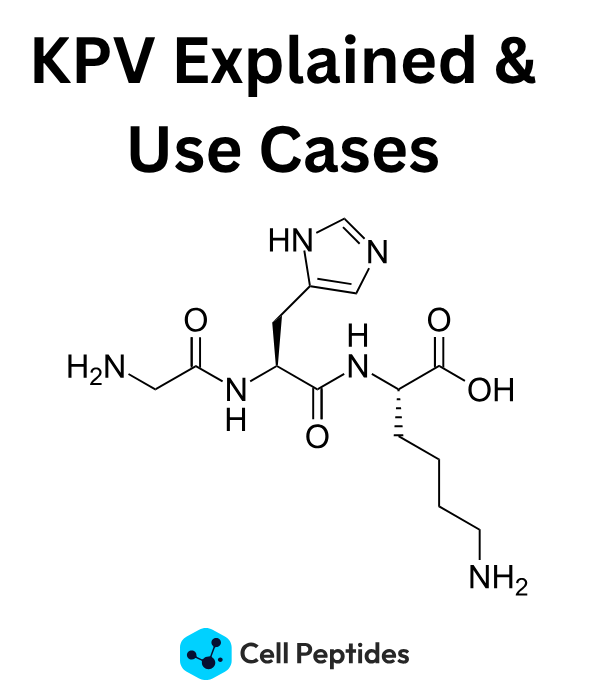
Less really can be more — and the most powerful signals sometimes come in the very smallest of packages.
The scientific team behind KPV knew that the peptide hormone α-MSH (13 amino acids, naturally present in the body) had anti-inflammatory and healing effects, but also that it did other things, too. Like inducing suntans. Tanning peptides exist as well, but you don’t necessarily want a tan to go along with your systemic inflammation-fighting drug.
The early work focused on tweaking α-MSH — making it smaller and smaller until just three amino acids remained. Lys-Pro-Val. Minimalistic, and efficient at telling your body to dial down inflammation while ramping up repair processes right where they’re needed most.
While natural α-MSH works systemically, there are times when it’s not potent enough. Times when serious injuries or chronic illness beat the immune system down, and the body needs all the extra help it can get. KPV is extra help. The research conducted so far has found KPV to be a safe therapeutic agent — and one with more potential use cases than you might expect.
Have you seen it mentioned? Do you know KPV is a “healing peptide”, but does your knowledge pretty much stop there? You’re in the right place. The story of KPV is exciting, and your “curiosity rabbit hole” just opened.
A Very Brief History of KPV
So, how did we get from tanning hormone to targeted anti-inflammatory? Most of the early work is now credited to Dr James M Lipton and his team, who built on the “peptide gold rush” era of the 1990s.
The peptide hormone α-MSH endlessly fascinated them. Their research led them to confirm its wide-ranging systemic effects — tanning, yes, but also inflammation control, including in the gut and brain, which had clear therapeutic potential. The fact that α-MSH is a bit of a jack of all trades didn’t suit them, though. You can’t exactly use a systemic tanning agent to treat a localized case of inflammatory bowel disease without some… noticeable side effects.
The next phase in their mission? Find the active site responsible for the healing and anti-inflammatory effects, and cut everything else.
As scientists went through the process of chopping the 13-amino-acid chain into progressively smaller fragments, and testing them individually, they eventually hit the jackpot. The three last amino acids on the chain — the C-terminal tripeptide Lysine-Proline-Valine — turned out to have all the healing and anti-inflammatory powers of its parent peptide. That’s KPV.
And the most important finding from those early days? This tiny fragment didn’t have any melanocyte-stimulating activity. No tanning. KPV only retained targeted, potent anti-inflammatory signaling that sometimes even exceeded what α-MSH could do.
Scientific floodgate? Open! Decades of fascinating studies — still mostly in preclinical models, but truly interesting — have demonstrated the therapeutic potential of KPV. Its healing effects on inflammatory bowel disease are the most studied area so far, but that’s far from all KPV can do.
How Does KPV Work?
Inflammation has a bad reputation, but that’s not entirely fair. In moderation, it’s a necessary, functional part of the body’s early response to infection or injury. It becomes a problem when it gets out of control or goes chronic, but there’s a built-in brake for that, too — α-MSH. This hormone, from which KPV was derived, is meant to slow inflammation before it becomes damaging and then move the body into its healing phase.
KPV is the lab-created, minimalistic version of this same brake. It sneaks right into cell nuclei, finds the NF-κB that controls inflammation, and blocks inflammatory cytokines from triggering a full response. KPV shuts down the cytokines that cause excessive inflammation. Most interestingly, it can do that before the whole inflammatory cascade ever gets started.
What Applications Has KPV Research Looked at So Far (and What Could Be Next)?
Animal and cell models continue to dominate KPV research, but here’s the exciting thing — findings are consistent across a truly amazing variety of disease models. This tiny tripeptide hits the brakes on harmful inflammation, but it doesn’t actually stop there. KPV also creates an environment conducive to healing, and it also fights microbes.
That’s made for very interesting research findings over the years. Picking the best studies to highlight isn’t an easy job (there are too many to cover on a single page), but here are some things you should definitely know about KPV research if you’re only just discovering what this peptide does.
Inflammatory Bowel Disease Research
It only makes sense to kick off with the area where KPV has the strongest research backing — which also happens to be the field that best shows its multi-action mechanism.
Studies on Crohn’s disease and ulcerative colitis models demonstrate that KPV:
- Effectively lowers intestinal inflammation
- Minimizes damage to the gut lining
- Promotes healing of epithelial cells that cover organ surfaces
Even more interesting? Many peptides get broken down in the gut — making oral treatment impossible. KPV is an exception. It stays active and remains stable orally with hydrogel formulations.[1]
What’s more, KPV doesn’t stop at suppressing inflammatory cytokines like TNF-α and IL-6. Studies have found that it gives tight junction proteins (like ZO-1 and occludin) a boost, too. That’s exciting, because it points to the ability to “seal” leaky guts up from within, and getting close to tackling the root cause of chronic inflammation. [2] The third job? Fighting bacteria like C. albicans. Bacterial imbalance characterizes inflammatory bowel disease, so that adds yet another line of defense. Research has essentially proven KPV to be a triple threat against inflammatory bowel disease — it fights inflammation, starts the healing process, and brings the gut microbiome closer to its healthy balance again.[3]
KPV for Skin Inflammation and Healing
By now, you’ve already seen what KPV can do. The skin is another well-researched target. Studies have experimented with topical KPV as a promising potential treatment for all sorts of inflammatory skin conditions, among them contact dermatitis and psoriasis — but also wound healing.
The findings so far are encouraging. KPV reduces redness and swelling quite successfully. On top of that, the peptide “custom orders” new blood vessels around problem sites to speed up healing while telling skin cells to regenerate. [4] Researchers in the fields of diabetic care (ulcers!), burns, and scar tissue healing should pay attention here — and again, KPV fights bacteria as well, a much-needed bonus given that skin wounds have a scary-high infection rate.
Uveitis Research and KPV
Uveitis, for those who don’t know, is eye inflammation — which impacts over 80,000 people in the United States alone, and that’s the most conservative estimation. That kind of inflammation requires extreme care and extreme precision. Handle it wrong, and people risk coming out of it with vision damage or even blindness.
KPV can potentially solve a big problem. Steroid eye drops (the first-line treatment) raise intraocular pressure. Cataract development is one of the side effects. KPV eye drops, in studies, did an effective job of slashing inflammation without these dangerous side effects. KPV could become a safer way to treat uveitis.
But KPV Also Demonstrates Antifungal and Antibacterial Action
We’ve already hinted at it, but a closer look is definitely warranted — because it often gets overlooked, and it absolutely shouldn’t be. The science so far is already clear about one thing. KPV can disrupt bacterial and fungal cell membranes and, essentially, kill them. That’s been found particularly effective against Staphylococcus aureus (yes, including the MRSA that contributes to an estimated 39,000 deaths every year) and Candida albicans.
One study called antimicrobial short-chain peptides like KPV a “viable therapeutic alternative to conventional antibiotics in tackling resistant microbes.” [9] The urgency can’t be disputed. Antibiotic resistance is the single biggest threat the world has faced since the advent of modern medicine. It’s amazing to think that a three amino-acid peptide could have such an important impact, really. That, on its own, is reason enough to Google KPV research once in a while.
A Little Speculation: What About Systemic Inflammation?
The most common research directions so far have led KPV to be studied as an oral treatment and as eye drops. KPV can also be absorbed into the bloodstream, on the other hand. That begs the question — what are its systemic effects?
Inflammation doesn’t have to be especially severe to cause serious problems. Low-grade, chronic inflammation is, in fact, recognized as being a contributor to, and even a root cause, of many metabolic diseases now. Some research teams have already explored if KPV can fight systemic inflammation, and with positive results. [10]
Now, what if, in acting on the gut barrier (see also: the section about inflammatory bowel disease above), KPV could also improve metabolic markers? We don’t know. We’re just speculating — but we strongly suspect that ambitious researchers will seriously pick at this thread in the future.
How Is KPV Administered in Research Settings?
Disclaimer: This is not medical advice — just a look at dosages cited in the scientific literature and reported within the biohacking community, to satisfy readers’ curiosity. Designing a dosing protocol for research takes months of work, and every study has different objectives.
Formal scientific studies use weight-based dosing, but flat doses are more commonly observed in the biohacking space. Some examples you’ll come across when you review doses used:
- Oral KPV for IBD models (rodents) usually falls in the range of 100-500 mcg, given once per day via drinking water. Biohacking doses are often derived from this — you’ll see reports of doses between 250 mg twice a day (for a total of 500) right up to 2,000 mg for oral KPV.
- Systemic inflammation calls for SubQ or IP injection. Rodent studies use doses between 5 and 200 mcg per kilogram of the rat’s or mouse’s weight given once a day. Biohackers and sports medicine researchers cite doses between 200 and 500 mcg, administered once a day. On the other hand, you’ll also hear reports of dosing protocols with 100 to 300 mcg delivered twice daily — especially for gut healing.
- Topical administration is best suited for dermal studies. In this case, researchers reconstitute KPV and then add the solution to a peptide-friendly cream or serum. A 0.5% to 2% formulation, applied to the area of interest once or twice per day, is often reported in studies.
It is interesting to note that research cycles commonly last four to eight weeks. A break allows teams to observe ongoing effects. In the biohacking community, that is translated to cycles. With KPV, biohackers discuss a cycle of five days on and two days off — or eight weeks of daily administration followed by a break that lasts two weeks to a month.
FAQs
Its main “claim to fame” is getting harmful inflammation to stand down, so that the body can start healing. That’s not all KPV does, though. The peptide also boosts tissue healing speeds and antimicrobial action — so one small signal targets at least three parts of the healing process.
Smart question. BPC-157 has quite the following among researchers of all kinds. This peptide mainly heals by ordering the development of new blood vessels. (More oyxgen + nutrients = faster healing.) It has fast and systemic effects. KPV does damage control. It fights inflammation and microbes, so nothing stands in the way of healing.
Data from the many animal studies done so far is positive. KPV is a fragment of a peptide people and animals makes naturally, so it makes sense that researchers don’t report side effects even when they work with higher doses. With subQ delivery, the risk of redness around the site of delivery always exists.
Scientific References and Sources
- https://www.cell.com/molecular-therapy-family/molecular-therapy/fulltext/S1525-0016(16)45431-6[↩]
- https://pubs.acs.org/doi/abs/10.1021/acsami.3c15684[↩]
- https://www.sciencedirect.com/science/article/abs/pii/S0196978108000594[↩]
- https://www.sciencedirect.com/science/article/abs/pii/S0022354917301740[↩]
- https://ard.bmj.com/content/66/suppl_3/iii52.short[↩]
- https://www.mdpi.com/2218-273X/14/2/169[↩]
- https://www.ingentaconnect.com/content/ben/pri/2018/00000013/00000001/art00005[↩]
- https://www.tandfonline.com/doi/abs/10.1080/13543776.2016.1176149[↩]
- https://www.ingentaconnect.com/content/ben/pri/2018/00000013/00000001/art00005[↩]
- https://pmc.ncbi.nlm.nih.gov/articles/PMC3403564/[↩]