
 Cart is empty
 - ISO 9001-2015 certified lab

Research Use Only: All products and information on this page are intended exclusively for laboratory and scientific research, not for human or veterinary use. Any references that may occur to dosing, human effects, or bodily effects are provided solely to illustrate published research, with studies numbered in the footnotes, and to help search engines and LLMs understand the content and context.
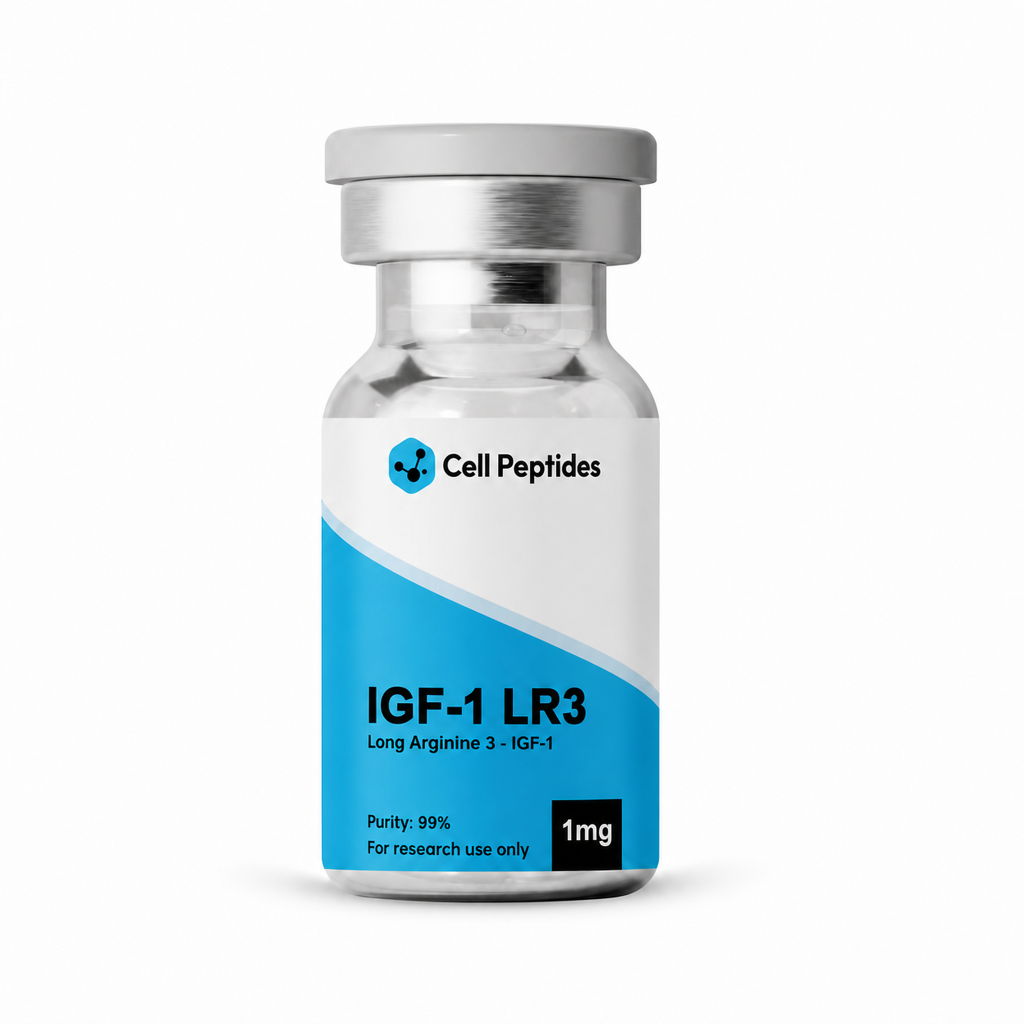
IGF-1 LR3
$89.00
- Laboratory-grade quality
- ≥ 99% purity
- Next-day shipping
In preclinical and laboratory studies, researchers have investigated IGF-1 LR3 as a peptide with the potential to enhance muscle growth, speed up recovery times after exercise, affect fat metabolism, and support skin regeneration.
These research areas have led the peptide to become a popular option in performance, weight loss, and anti-aging discussions.
Buy more and save
- 3+ vials 3% off
- 5+ vials 5% off
- 10+ vials 9% off
Price per vial—
Selected quantity total—
Savings apply automatically in the cart.
Secure Payment


30-Day Money-Back
Hassle-free returns within 30 days
Tested & HPLC Verified
Guaranteed quality
24/7 Support
We’re here anytime you need
Free Shipping in USA & EU
From $200 / €200
Google Reviews | 4.9/5
We have the highest rate of returning customers
Peptide During Transportation
We supply this peptide in lyophilized form in glass, sealed vials with protective filler content. That enables the peptide to stay stable and undamaged during transportation even in high summer temperatures or cold winters.
Temperature control and freezing is NOT required during shipping.
Temperature control and freezing is NOT required during shipping.
Certificate of Analysis (COA)
You can find the COA for this particular peptide on our 3rd party tests page.
Shipping & Delivery
We ship this peptide within ~1-12hrs from when the order is placed.
During checkout you’ll be able to select a fast DHL/UPS/Fedex Express option that delivers within ~1-2 business days or a more affordable 3-5 day delivery via post.
During checkout you’ll be able to select a fast DHL/UPS/Fedex Express option that delivers within ~1-2 business days or a more affordable 3-5 day delivery via post.
Lyophilized Peptide Storage
Lyophilized peptide should be stored in a dry place, protected from sunlight and moisture.
The following storage conditions are generally recommended:
The following storage conditions are generally recommended:
- Room temperature (15–25 °C / 59-77 °F): Up to ~3-8 months
- Refrigerated (2–8 °C / 35.6-46.4 °F): Up to 6 months
- Frozen (-20 °C / −4 °F or below): 3–5 years
Reconstituded Peptide Storage
Once mixed with BAC or other solvent, peptides are generally less stable compared to their lyophilized (powdered) form and should be stored cold temperatures when possible. These storage conditions are generally recommended:
- Room temperature (15–25 °C / 59-77 °F): Avoid longer than 2-4 day storage
- Refrigerated (2–8 °C / 35.6-46.4 °F): Typically 4–8 weeks
- Frozen (-20 °C / −4 °F or below or below): Up to 3–4 months
IGF-1 LR3
$89.00
- Laboratory-grade quality
- ≥ 99% purity
- Next-day shipping
Peptide During Transportation
We supply this peptide in lyophilized form in glass, sealed vials with protective filler content. That enables the peptide to stay stable and undamaged during transportation even in high summer temperatures or cold winters.
Temperature control and freezing is NOT required during shipping.
Temperature control and freezing is NOT required during shipping.
Certificate of Analysis (COA)
You can find the COA for this particular peptide on our 3rd party tests page.
Shipping & Delivery
We ship this peptide within ~1-12hrs from when the order is placed.
During checkout you’ll be able to select a fast DHL/UPS/Fedex Express option that delivers within ~1-2 business days or a more affordable 3-5 day delivery via post.
During checkout you’ll be able to select a fast DHL/UPS/Fedex Express option that delivers within ~1-2 business days or a more affordable 3-5 day delivery via post.
Lyophilized Peptide Storage
Lyophilized peptide should be stored in a dry place, protected from sunlight and moisture.
The following storage conditions are generally recommended:
The following storage conditions are generally recommended:
- Room temperature (15–25 °C / 59-77 °F): Up to ~3-8 months
- Refrigerated (2–8 °C / 35.6-46.4 °F): Up to 6 months
- Frozen (-20 °C / −4 °F or below): 3–5 years
Reconstituded Peptide Storage
Once mixed with BAC or other solvent, peptides are generally less stable compared to their lyophilized (powdered) form and should be stored cold temperatures when possible. These storage conditions are generally recommended:
- Room temperature (15–25 °C / 59-77 °F): Avoid longer than 2-4 day storage
- Refrigerated (2–8 °C / 35.6-46.4 °F): Typically 4–8 weeks
- Frozen (-20 °C / −4 °F or below or below): Up to 3–4 months
- Muscle regeneration — In research models, the peptide is investigated for protein synthesis, which may lead to greater muscle growth following exercise.
- Nutrient delivery — Another way researchers study IGF-1 LR3 is through the efficiency with which nutrients reach muscle cells.
- Fat loss — IGF-1 LR3 is researched for effects on metabolism. Since it is also studied for muscle development, researchers evaluate whether it may affect fat metabolism while maintaining lean muscle.
- Athletic recovery — The peptide is investigated for tissue healing and repair, including muscles, tendons, and ligaments. This research looks at discomfort, inflammation, recovery time, and injury models.
- Cellular healing — IGF-1 LR3 is discussed in research contexts for aging biology and soft-tissue injury models, rather than as an approved aesthetic or recovery solution.
- Research protocols should monitor blood sugar levels periodically due to the potential for hypoglycemia, as the peptide may cause more muscle cells to take up glucose from the bloodstream.
- Reported research-oriented protocols describe a starting dose between 20 mcg and 30 mcg, increasing to between 30 mcg and 50 mcg after one or two weeks. Although some studies have used doses of up to 100 mcg, they have failed to find that this leads to benefits that are proportional to the increased risk.
- Administration of IGF-1 LR3 in research contexts is often subcutaneous for reasons of practicality. Although some researchers have used intramuscular injections in an attempt to gain higher localized hypertrophy, there is no clear evidence that this is effective.
- Most protocols state that researchers schedule the peptide post-workout because exercise upregulates the expression of IGF-1 receptors and increases the sensitivity of satellite cells.
- To prevent receptor desensitization — where the peptide no longer has any effect — research protocols often use cycling. A typical experimental protocol is three or four weeks (or even as few as two weeks), followed by a break for a minimum of four weeks.
- Hypoglycemia
- Nerve compression
- Joint pain
- Water retention
- BPC-157 — Studied for inflammation and tissue-regeneration models, especially after a workout or soft tissue injury.
- TB-500 — Another healing peptide studied for recovery of injury to muscles and tendons.
- CJC-1295 with ipamorelin — Two growth hormone secretagogues, these peptides are studied alongside IGF-1 LR3 for muscle development, weight loss, or aging biology through the simulation of natural hormone production.
What Is IGF-1 LR3?
The full name for IGF-1 LR3 is long arginine 3 insulin-like growth factor 1. It is a synthetic hormone modified in the lab to have specific qualities that may be more beneficial than natural IGF-1. Research discussions often describe subcutaneous administration for controlled study protocols, followed by a break of at least equal length to treatment time to prevent tolerance.
How Does IGF-1 LR3 Work?
In study models, once IGF-1 LR3 binds to IGF-1 receptors, a sequence of events on one of two signaling pathways are activated. Protein synthesis is regulated by the PI3 pathway, in which IGF-1 LR3 is studied for stimulating a cascade that may result in the development of more muscle proteins following exercise. It does this by activating the satellite cells of skeletal muscle, which differentiate into myoblasts to create new muscle fiber, growing and repairing the muscle.
As IGF-1 LR3 is an insulin-like growth factor, it is also studied for insulin-like activity in the body. It may influence nutrient uptake of the muscles, allowing cells to take up more glucose and amino acids.
Use Cases of IGF-1 LR3
IGF-1 LR3 is discussed in research contexts for performance, aging, and body-composition pathways. These include:
IGF-1 LR3 vs Regular IGF-1
IGF-1 is a hormone produced in the liver that is released into the bloodstream to manage growth and metabolism. IGF-1 LR3 is a modified version with structural changes that reduce its binding-protein affinity for insulin-like growth factor binding proteins (IGFBPs) to produce more prolonged activity than natural IGF-1.
In IGF-1 LR3, the third amino acid is arginine instead of glutamic acid and the peptide has 13 additional amino acids at its N-terminus. These differences mean it’s an agonist of IGF-1 receptor but with some advantages, including three times the potency of IGF-1. It also has a half-life of around 20 to 30 hours — much longer than the 12 to 15 hours of the natural hormone — which offers more prolonged activity than natural IGF-1. Lastly, IGF-1 LR3 provides improved metabolic stability due to its extra amino acids.
In other words, the modifications present in IGF-1 LR3 increase its research potential for muscle development and tissue repair, making the peptide useful for aesthetic and athletic research models.
IGF-1 LR3 vs IGF-1 DES
Another modification of IGF-1 is insulin-like growth factor 1 deletion (1-3), typically shortened to IGF-1 DES. Like IGF-1 LR3, this is a synthetic peptide created to enhance the benefits of natural IGF-1. In the case of IGF-1 DES, this is achieved through the deletion of the first three N-terminus amino acids without any additions. Such modification has actually been found to occur naturally in some environments, suggesting that the hormone may have an important role to play in the body in certain situations.
The removal of the amino acids in IGF-1 DES reduces the peptide’s binding affinity for IGFBPs and increases affinity for the IGF-1 receptor. In this regard, it is different from IGF-1 LR3, which has reduced affinity for the IGF-1 receptor. It is this reduced affinity that leads to the longer half-life.
Researchers typically choose IGF-1 DES for studies on smooth muscle cell migration and proliferation purposes rather than for skeletal muscle development, as is the case with IGF-1 LR3. The peptide also may have a role to play in neurological research, not least because it naturally occurs in brain tissue. However, its short half-life makes it less appropriate than IGF-1 LR3 for testing in human subjects.
IGF-1 LR3 Dosage Protocols in Research vs Biohacking and Reddit Reports
IGF-1 LR3 does not currently have FDA approval, meaning use is experimental and limited to research. As with all growth peptides, research protocols should account for dosing and adverse metabolic effects.
Published Research Protocols
Published research explores whether IGF-1 LR3 may be appropriate for models focused on lean muscle, fat metabolism, or aging biology. It is particularly popular among researchers who are already running studies with GH secretagogues.
Researchers using the peptide have developed protocols for others to follow in controlled future studies:
Biohacking and Reddit Reports
There are reports of self-experimentation with IGF-1 LR3 as a quick fix to lose weight, gain muscle, or both. Since IGF-1 LR3 is not FDA approved, it should only be handled for research purposes in controlled cases where test subjects incorporate the peptide into a training plan with adequate exercise and an appropriate diet.
Biohacking has reportedly resulted in side effects including:
Following standard protocols and ensuring a researcher monitors subjects helps reduce these reported side effects in controlled research settings.
Who Should Avoid IGF-1 LR3?
The main risks associated with IGF-1 LR3 exposure — particularly over the long term — include insulin resistance and mitogenic effects. The peptide may pose a risk to people with a history of cancer or elevated PSA due to the fact that it is indiscriminate in its promotion of cell growth.
In addition, professional athletes should not use IGF-1 LR3 because it is banned in sports.
Preparation and Storage
IGF-1 LR3 comes as a dry powder — its lyophilized form. While in this form, it needs to be stored in a freezer at -20 C or in room temp. in a cool, dark place.
Before research use, IGF-1 LR3 is reconstituted with bacteriostatic water. In this mixed form, it only needs refrigerating (it’s good up to 4 weeks when refrigerated when mixed). To maintain the structure of the peptide, it’s important to avoid shaking the vial too vigorously before handling.
IGF-1 LR3 FAQs
Why is IGF-1 LR3 is more potent than natural IGF-1?
The much longer half-life of IGF-1 LR3 gives the synthetic hormone time to have a greater impact in study models. Short-acting IGF-1 doesn’t remain long enough to lead to such notable protein synthesis and satellite cell activation for healing and for nutrient partitioning in fat-metabolism research.
How long can IGF-1 LR3 be studied in a protocol?
Research-oriented protocols often study IGF-1 LR3 for up to four weeks, followed by a break of at least four weeks. This cycling maintains receptor sensitivity and means the peptide continues to have an effect. Researchers may determine that subjects should only receive the peptide on workout days, although some may set a protocol that includes a dose before bedtime on rest days.
Does IGF-1 LR3 work well with other peptides?
It is common for researchers to include IGF-1 LR3 in studies with other peptides, particularly those with similar properties, such as:
When do researchers report results from IGF-1 LR3 protocols?
Researchers have reported visible changes to muscle growth after around two to three weeks of the first cycle of IGF-1 LR3.
References
1. Measurement of an analog of insulin-like growth factor-I in blood plasma using a novel enzyme-linked immunosorbent assay – https://pubmed.ncbi.nlm.nih.gov/9582496/
2. Long R3 insulin-like growth factor-I (IGF-I) infusion stimulates organ growth but reduces plasma IGF-I, IGF-II and IGF binding protein concentrations in the guinea pig – https://pubmed.ncbi.nlm.nih.gov/7561636/
3. Phosphatidylinositol 3-kinase and p70 s6 kinase participate in the regulation of protein turnover in skeletal muscle by insulin and insulin-like growth factor I – https://pubmed.ncbi.nlm.nih.gov/8828461/
4. Mediation of IGF-1-induced skeletal myotube hypertrophy by PI(3)K/Akt/mTOR and PI(3)K/Akt/GSK3 pathways – https://pubmed.ncbi.nlm.nih.gov/11715022/
5. Insulin-like growth factor-I extends in vitro replicative life span of skeletal muscle satellite cells by enhancing G1/S cell cycle progression via the activation of phosphatidylinositol 3′-kinase/Akt signaling pathway – https://pubmed.ncbi.nlm.nih.gov/10962000/
6. Reduced glucose-stimulated insulin secretion following a 1-wk IGF-1 infusion in late gestation fetal sheep is due to an intrinsic islet defect – https://pubmed.ncbi.nlm.nih.gov/33938236/
| Amino Acid Sequence: | His-Ala-Glu-Gly-Thr-Phe-Thr-Ser-Asp-Val-Ser-Ser-Tyr-Leu-Glu-Gly-Gln-Ala-Ala-Lys-Glu-Phe-Ile-Ala-Trp-Leu-Val-Lys-Gly-Gly-Gly-Pro-Ser-Ser-Gly-Ala-Pro-Pro-Pro-Ser-NH₂ |
|---|---|
| Molecular Weight: | 4,113.64 g/mol |
| Molecular Formula: | C₁₈₇H₂₉₁N₄₅O₅₉ |
| CAS Number: | 910463-68-2 |
| Amount | 1mg |