
 Le panier est vide
 - Laboratoire certifié ISO 9001:2015
Réservé à la recherche : Tous les produits et informations de cette page sont destinés exclusivement à la recherche de laboratoire et scientifique, et non à un usage humain ou vétérinaire. Toute référence éventuelle à des dosages, des effets sur l'homme ou des effets corporels est fournie uniquement pour illustrer des recherches publiées, les études étant numérotées dans les notes de bas de page, et pour aider les moteurs de recherche et les grands modèles de langage (LLM) à comprendre le contenu et le contexte.
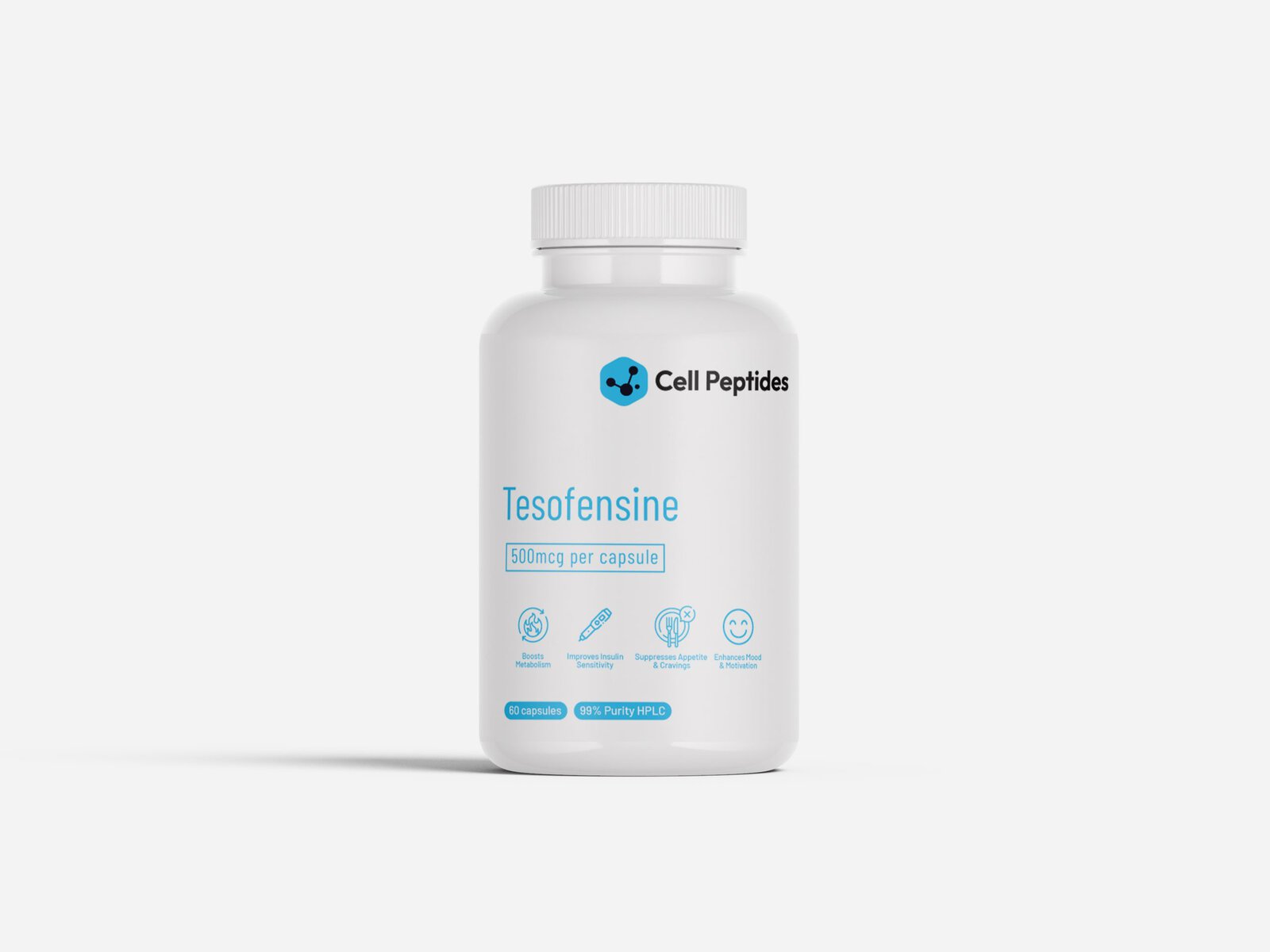
Tésofensine 500mcg (60 Gélules)
$125.48
- Qualité de laboratoire
- pureté ≥ 99%
- Livraison le jour suivant
Tesofensine is known as an exciting and promising future obesity treatment already set to be clinically approved in Mexico now, but that’s not how this triple reuptake inhibitor started out. The Danish researchers behind this compound originally had it pegged as a potential treatment for Alzheimer’s and Parkinson’s. Because it doesn’t just nudge one neurotransmitter. It targets three at once.
Early research led the team behind Tesofensine to an unexpected discovery soon enough. Clinical trial participants taking a compound designed to protect brain cells also lost weight. Sometimes, it turns out, the fastest path to managing weight and achieving a metabolic reset actually isn’t in the gut. It’s in the brain. Tesofensine opens the door for further study into one of the most powerful appetite suppressants ever discovered. Tesofensine remains experimental outside of Mexico — and that fact should get researchers who can’t wait to contribute to the future of weight management to listen up. The door for new discoveries is wide open, and your fat burning research starts with CellPeptides.
- Achetez plus et économisez
3 flacons ou plus
-3% désactivé
5+ flacons
-5% désactivé
10+ flacons
-9% désactivé
Paiement sécurisé


Garantie de remboursement de 30 jours
Retours faciles sous 30 jours
Testé et vérifié par HPLC
Qualité garantie
Assistance 24h/24 et 7j/7
Nous sommes là chaque fois que vous en avez besoin
Livraison gratuite aux États-Unis et dans l'UE
À partir de $150 (130 €)
Avis Google | 4,9/5
Nous avons le taux de fidélisation le plus élevé
Peptide pendant le transport
Nous fournissons ce peptide sous forme lyophilisée dans des flacons en verre scellés contenant une charge de protection. Cela permet au peptide de rester stable et intact pendant le transport, même en cas de fortes chaleurs estivales ou d'hivers rigoureux.
Le contrôle de la température et la congélation ne sont PAS requis pendant l'expédition.
Le contrôle de la température et la congélation ne sont PAS requis pendant l'expédition.
Certificat d'analyse
Vous pouvez trouver le certificat d'analyse (COA) de ce peptide particulier sur notre Page de tests par des tiers.
Expédition et livraison
Nous expédions ce peptide dans un délai d'environ 1 à 12 heures après la passation de la commande.
Lors du paiement, vous pourrez choisir une option express rapide DHL/UPS/Fedex qui livre en environ 1 à 2 jours ouvrables ou une livraison plus abordable de 3 à 5 jours par la poste.
Lors du paiement, vous pourrez choisir une option express rapide DHL/UPS/Fedex qui livre en environ 1 à 2 jours ouvrables ou une livraison plus abordable de 3 à 5 jours par la poste.
Stockage des peptides lyophilisés
Le peptide lyophilisé doit être conservé dans un endroit sec, à l'abri de la lumière du soleil et de l'humidité.
Les conditions de stockage suivantes sont généralement recommandées :
Les conditions de stockage suivantes sont généralement recommandées :
- Température ambiante (15-25 °C / 59-77 °F) : Jusqu'à environ 3 à 8 mois
- Réfrigéré (2–8 °C / 35,6–46,4 °F) : Jusqu'à 6 mois
- Surgelé (-20 °C / −4 °F ou moins) : 3 à 5 ans
Conservation des peptides reconstitués
Une fois mélangés avec de l'eau bactériostatique (BAC) ou un autre solvant, les peptides sont généralement moins stables que sous leur forme lyophilisée (en poudre) et doivent être conservés à basse température lorsque cela est possible. Les conditions de conservation suivantes sont généralement recommandées :
- Température ambiante (15-25 °C / 59-77 °F) : éviter un stockage de plus de 2 à 4 jours
- Réfrigéré (2–8 °C / 35,6-46,4 °F) : Généralement 4 à 8 semaines
- Surgelé (-20 °C / −4 °F ou moins) : Jusqu'à 3 à 4 mois
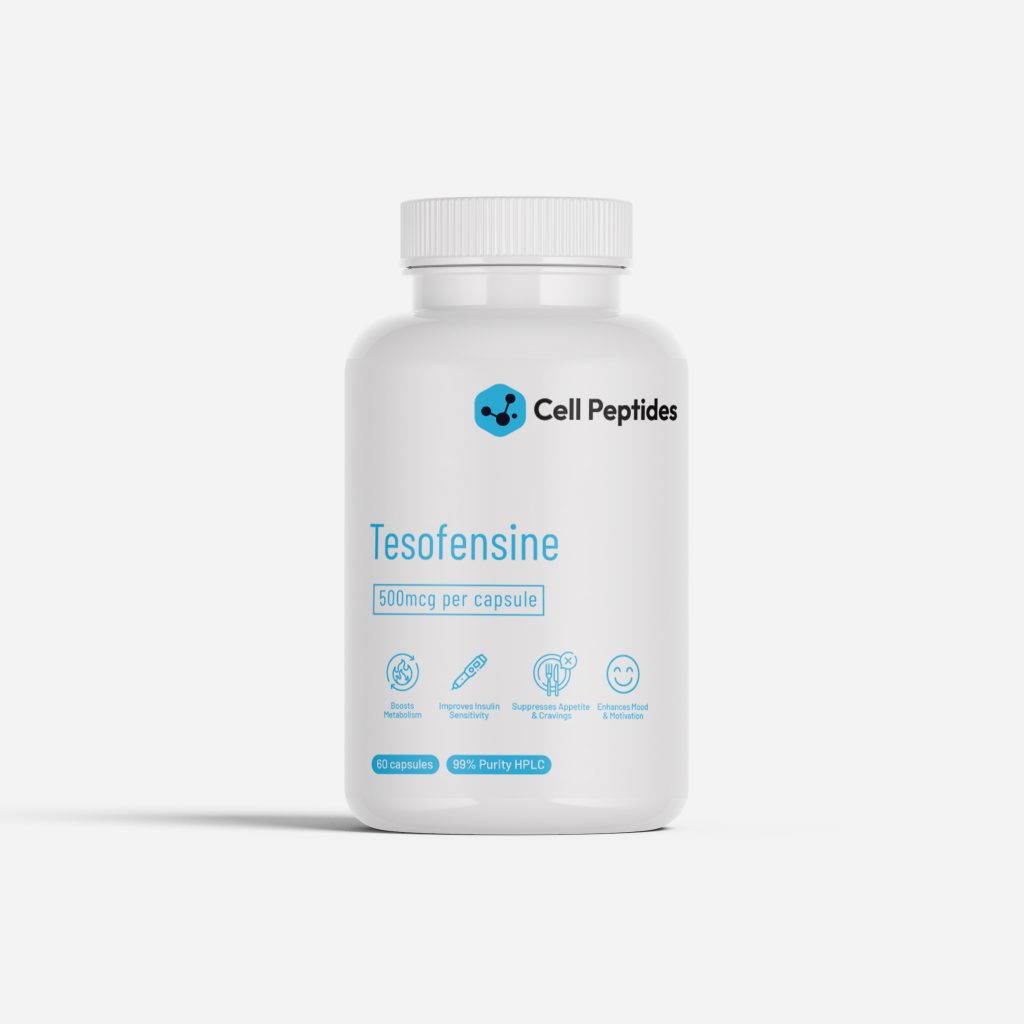
Tésofensine 500mcg (60 Gélules)
$125.48
- Qualité de laboratoire
- pureté ≥ 99%
- Livraison le jour suivant
- Achetez plus et économisez
3 flacons ou plus
-3% désactivé
5+ flacons
-5% désactivé
10+ flacons
-9% désactivé
Peptide pendant le transport
Nous fournissons ce peptide sous forme lyophilisée dans des flacons en verre scellés contenant une charge de protection. Cela permet au peptide de rester stable et intact pendant le transport, même en cas de fortes chaleurs estivales ou d'hivers rigoureux.
Le contrôle de la température et la congélation ne sont PAS requis pendant l'expédition.
Le contrôle de la température et la congélation ne sont PAS requis pendant l'expédition.
Certificat d'analyse
Vous pouvez trouver le certificat d'analyse (COA) de ce peptide particulier sur notre Page de tests par des tiers.
Expédition et livraison
Nous expédions ce peptide dans un délai d'environ 1 à 12 heures après la passation de la commande.
Lors du paiement, vous pourrez choisir une option express rapide DHL/UPS/Fedex qui livre en environ 1 à 2 jours ouvrables ou une livraison plus abordable de 3 à 5 jours par la poste.
Lors du paiement, vous pourrez choisir une option express rapide DHL/UPS/Fedex qui livre en environ 1 à 2 jours ouvrables ou une livraison plus abordable de 3 à 5 jours par la poste.
Stockage des peptides lyophilisés
Le peptide lyophilisé doit être conservé dans un endroit sec, à l'abri de la lumière du soleil et de l'humidité.
Les conditions de stockage suivantes sont généralement recommandées :
Les conditions de stockage suivantes sont généralement recommandées :
- Température ambiante (15-25 °C / 59-77 °F) : Jusqu'à environ 3 à 8 mois
- Réfrigéré (2–8 °C / 35,6–46,4 °F) : Jusqu'à 6 mois
- Surgelé (-20 °C / −4 °F ou moins) : 3 à 5 ans
Conservation des peptides reconstitués
Une fois mélangés avec de l'eau bactériostatique (BAC) ou un autre solvant, les peptides sont généralement moins stables que sous leur forme lyophilisée (en poudre) et doivent être conservés à basse température lorsque cela est possible. Les conditions de conservation suivantes sont généralement recommandées :
- Température ambiante (15-25 °C / 59-77 °F) : éviter un stockage de plus de 2 à 4 jours
- Réfrigéré (2–8 °C / 35,6-46,4 °F) : Généralement 4 à 8 semaines
- Surgelé (-20 °C / −4 °F ou moins) : Jusqu'à 3 à 4 mois
- Pureté de qualité pharmaceutique — ≥99%.
- A compound synthesized in a WHO/GMP and ISO 9001:2015 certified lab in the European Union. We’re a Swiss-based scientific and research company, and our manufacturing process is as precise as a Swiss watch.
- Independent, third-party lab testing that allows you to review the purity and composition of our Tesofensine for yourself.
- Fast, secure, and global temperature-controlled shipping — with insurance and tracking.
- Flexible payment options — credit card, bank transfers, and cryptocurrency.
-
How Tesofensine Works
- Most people already know that these three neurotransmitters are important for managing mood and motivation. They’re also, on the other hand, involved in feelings of reward (very important for binge eaters!) and appetite, which is why they’re interesting targets for weight loss.
- Once these neurotransmitters are sent out to do their jobs, they get reabsorbed and the signal ends. That’s the “reuptake” part.
- Tesofensine blocks the proteins that transport serotonin, dopamine, and norepinephrine, for reabsorption — and keeps their signals alive for longer.
-
Tesofensine in Weight Loss Research: The Most Exciting Findings So Far
-
Tesofensine Makes Dramatic Weight Loss Possible (Even at Low Doses)
-
Tesofensine Opens the Door for a Metabolic Reset
-
Who Might Consider Researching Tesofensine?
- Weight loss plateaus — and how to overcome them.
- Appetite control through the brain.
- Comorbidities like diabetes and metabolic syndrome, and the impact Tesofensine has on health markers like cholesterol profiles.
-
Common Dosing Protocols for Tesofensine in In-Vitro Research Settings
-
FAQ
-
Références et sources scientifiques
- https://onlinelibrary.wiley.com/doi/full/10.1038/oby.2008.56
- https://www.thelancet.com/journals/lancet/article/PIIS0140-6736(08)61525-1/abstract?isEOP=true
- https://www.researchgate.net/profile/Nicholas-Bello/publication/26834464_Tesofensine_a_monoamine_reuptake_inhibitor_for_the_treatment_of_obesity/links/54515beb0cf24884d886ffb3/Tesofensine-a-monoamine-reuptake-inhibitor-for-the-treatment-of-obesity.pdf
- https://www.benthamdirect.com/content/journals/emiddt/10.2174/1871530323666230825140808
Why Choose CellPeptides for Your Tesofensine Research?
Tesofensine is a complex compound. Determining the “sweet spot” — the dose at which Tesofensine is most effective while minimizing potential side effects like insomnia and mood swings — is one of the main challenges researchers face. That process? It depends on a supplier who knows the stakes and guarantees precision every time.
Start your obesity research with Tesofensine from CellPeptides, and you get:
Should you have any questions, whether about your order or your research design, CellPeptides is always on hand to get them answered. Our Tesofensine was designed by researchers, for researchers, and our support team is here to help you get your weight loss studies started on the right foot.
Clinical trials have already shown what Tesofensine can do — the TIPO-1 trial, which ran for six months, saw impressive weight loss results. On the highest dose of 1.0 mg, participants lost an average of 10.6 percent of their starting weights, while people stuck in the placebo group scraped by with just two percent.
Curious yet? The mechanism of action is just as interesting. Tesofensine works by slowing down how fast serotonin, norepinephrine, and dopamine get recycled in the synaptic cleft.
The end result? A real boost in signaling models. This trio doesn’t work alone, either. The neurotransmitters Tesofensine targets make for a strong team. Serotonin makes you feel full for longer. It helps you feel calm and content. Norepinephrine ups your metabolic rate for faster fat burning, and dopamine gives you the message that you should be feeling happy, not deprived and hungry.
It says: “You’ve eaten enough. Go feel satisfied and energized.” And that? That can make all the difference when you’re dealing with a chronic metabolic disease that also hijacks the brain messaging to constantly tell you you need more food.
Tesofensine started its life as a neuroprotective compound — but research didn’t overwhelmingly shift to obesity treatment and fat burning on a hunch. It happened when evidence of dramatic weight loss was too strong to ignore. While studying how Tesofensine impacted the symptoms of people with Alzheimer’s and Parkinson’s, researchers noticed spontaneous weight loss. In patients who weren’t taking part in a weight loss program and therefore didn’t change their diets at all. That’s what put Tesofensine on the map as a potential weight loss medication, and studies changed direction from there. [1]
The most interesting findings so far? We’re glad you asked, because we can’t wait to give you a tour.
This is, of course, the headline grabber. It proves that Tesofensine is effective. Most famous is the TIPO-1 trial published in The Lancet in 2008, in which participants across five obesity management centers in Denmark were either prescribed Tesofensine + a calorie-restricted diet, or just the diet.
The placebo group didn’t lose much weight. Just over two percent over 24 weeks. The story was more optimistic on the Tesofensine side of the aisle. People on the lowest dose used in research, 0.25 mg, had an average loss result of of 4.5 percent. That figure jumped to 9.2 percent on 0.50 mg. And with the highest dose, 1.0 mg? Trial participants successfully lost over 10 percent of their starting weights by the end of the study. Not too shabby!
What’s interesting here is that Tesofensine was effective at a relatively low dose, and that research shows it gets to work fast. It wasn’t entirely side-effect-free — common complaints included dry mouth, nausea, and constipation — but the adverse effects were manageable. [2] What’s more, patients report feeling less hungry on Tesofensine, reports that come backed by visual evidence of increasingly smaller portion sizes. [3] Exciting! Tesofensine doesn’t directly target the gut (as some other weight loss compounds do), and instead manages appetite control from within the brain.
That kind of weight loss is impressive — and for many who’ve tried and failed to shed excess pounds for many years, life-changing. Weight loss isn’t the only thing that matters, though. Getting the secondary health markers under control is just as important, and Tesofensine research demonstrates it has a positive effect there, too.
Clinical trial data are clear. Tesofensine helped trial participants slash their triglyceride and total cholesterol levels, with immediately obvious health benefits. On top of that, it also reduced plasma insulin and HbA1C levels. [3] Although not much research has been done into the possibility that Tesofensine could get people with prediabetes off the track toward another chronic condition yet, that potential also exists, and Tesofensine might have a future as part of a combination therapy for Type 2 Diabetes. [4]
Tesofensine deserves a place in your lab if you are an obesity researcher who’s obsessed with powerful dual-action compounds. If you’re interested in how serotonin, dopamine, and norepinephrine regulate appetite and energy expenditure from within the brain. Tesofensine is for researchers who want to compare the effects of a centrally-acting strategy to the effects of GLP-1 weight loss peptides.
More specifically? Tesofensine should be of interest if you’re studying:
Clinical trials demonstrate two things. Tesofensine is effective at inducing weight loss at low doses, and it has a long half life of around eight days. Research done so far has already yielded a fairly established dosing protocol for Tesofensine capsules (which are taken orally).
The most commonly seen daily Tesofensine doses seen in studies with the compound range from 0.25 mg at the lower end, suitable for modest weight loss goals, to 0.50 mg and 1.0 mg at the upper end. Researchers generally start with the lowest dose to observe how their model responds and titrate up gradually if Tesofensine is well tolerated. The most talked-about trial lasted 24 weeks, but shorter or longer research periods are also possible.
Researchers who are designing new Tesofensine studies derive immense benefit from already published data. Start with a literature review, adapt established doses to your model, and create a protocol geared toward the goal of your research. Every scientific breakthrough starts with careful planning.
Surprised not to see guidance on reconstitution? Tesofensine is shipped in capsule form and ready for research via oral administration. For in-vivo research, it is readily soluble DMSO for stock solution creation.
Is Tesofensine still promising for neuroprotection?
Yes. Researchers really primarily shifted to weight loss research after the potential in this area became clear, but Tesofensine is still scientifically interesting for neuroprotection as well.
How much weight did trial participants on Tesofensine lose?
The data so far show that losing 10+ percent is realistic over the course of six months (with a long half life, the compound has cumulative effects). A calculator will help you determine the rest.
Which is more effective for weight loss: Tesofensine or Semaglutide?
Semaglutide is more effective if you look at the raw numbers on the scale. That’s not the only interesting question, though. Because these compounds have different mechanisms of action, Tesofensine has the potential to be effective even for people who cannot tolerate Semaglutide or who did not have strong weight loss results with it. Having more options is one of the most important things in weight loss research.
| Quantité | 60 gélules |
|---|---|
| Poids moléculaire | 328.28 g/mol |
| Formule moléculaire : | C₁₇H₂₃Cl₂NO |
| Numéro CAS : | 195875-84-4 |